
What Types of Business Financing Can Fuel Long-Term Growth?
The best financing option depends on what your business is trying to accomplish—not just how much capital you want.
Business financing is not one-size-fits-all. A company buying equipment may have very different needs from a company covering a short-term cash-flow gap, adding employees, purchasing inventory, or opening a second location.
That is why one of the first questions to ask is not simply, “How much can I get?” A better starting point is, “What am I trying to accomplish with the money?”
Understanding the purpose of the financing can help narrow down which options may be worth exploring.
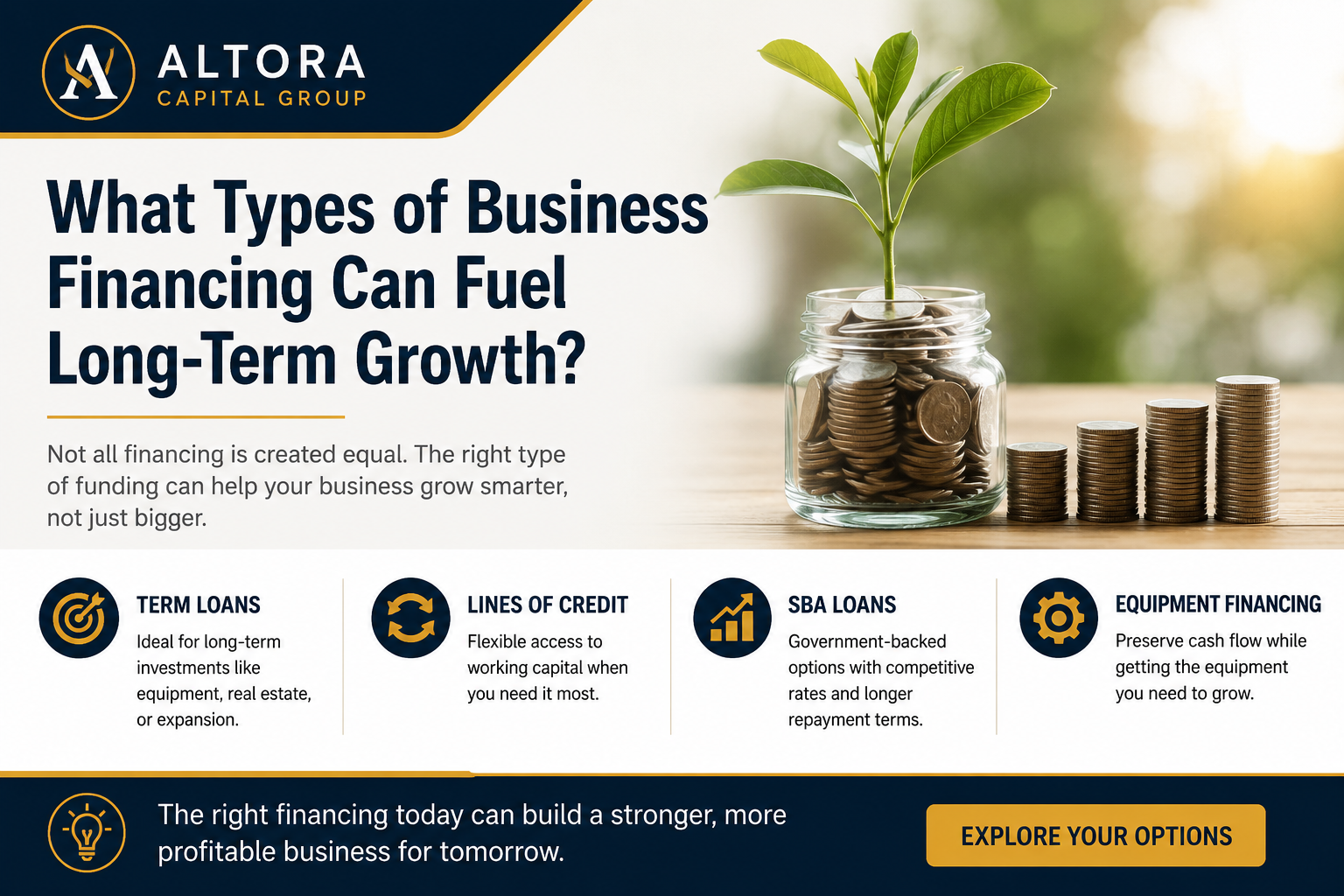
1. Term Loans
A business term loan generally provides a lump sum of capital that is repaid over an agreed period of time. Terms, rates, collateral requirements and qualification standards vary by lender and product.
Term financing may be considered for larger or more defined investments such as expansion, renovations, major purchases or other long-term business needs.
May fit when:
You have a clearly defined project or investment and know approximately how much capital is needed.
Think about:
The expected payment, repayment period, total cost of financing and whether the project is likely to support that obligation.
2. Business Lines of Credit
A business line of credit can provide access to funds up to an approved limit, with the business typically drawing only what it needs. Depending on the structure, amounts repaid may become available to use again.
This flexibility can make a line of credit useful for recurring or unpredictable short-term needs.
May fit when:
You need flexible access to working capital for inventory, seasonal expenses, short-term opportunities or temporary cash-flow gaps.
Think about:
How often you expect to use the line, the cost of borrowing, minimum payments, renewal requirements and whether the balance will realistically be paid down.
3. SBA-Related Financing
Some business loans are made by participating lenders and supported by programs from the U.S. Small Business Administration. These programs can be used for a variety of eligible business purposes, depending on the specific program and lender.
Eligibility, documentation, underwriting, use-of-funds rules and timelines vary by program and lender.
May fit when:
Your business is planning a substantial long-term investment and you have time to complete a more detailed application and documentation process.
Think about:
The specific program, lender requirements, eligibility rules, documentation, timing, collateral, guarantees and permitted uses of funds.
4. Equipment Financing
Equipment financing is designed specifically to help a business purchase or lease equipment. Depending on the structure, the equipment itself may serve as collateral for the financing.
This can allow a business to acquire an important asset without paying the entire purchase price upfront.
May fit when:
You need vehicles, machinery, technology, production equipment or other business assets that can help generate revenue or improve operations.
Think about:
The useful life of the equipment, down payment, repayment term, ownership structure, maintenance costs and how quickly the asset may become outdated.
5. Working Capital Financing
Working capital financing is generally used to support everyday operating needs rather than a single long-term asset purchase.
Businesses may consider working capital for payroll, marketing, inventory, repairs, seasonal expenses or other short-term operational needs.
Match the Financing to the Life of the Need
One practical way to think about financing is to compare how long the business will benefit from the purchase with how long it will be paying for it.
For example, financing a piece of equipment that may produce revenue for several years is very different from borrowing to cover a temporary expense that will disappear next month.
Consider the Payment—Not Just the Approval Amount
Being approved for a certain amount does not automatically mean borrowing the full amount is the right decision.
Before moving forward, consider how the payment fits into the business's normal cash flow, what happens during slower months and whether the expected benefit of the financing justifies the added obligation.
Questions to Ask Before Choosing a Financing Option
What exactly will the money be used for?
How much capital does the business actually need?
How quickly is the money needed?
How long will the business benefit from the investment?
What payment can the business comfortably support?
What documentation will likely be required?
What is the total expected cost of the financing?
The Bottom Line
There is no single “best” business financing product for every company. The right option depends on the business, the purpose of the funding, the amount needed, the repayment structure, timing, qualifications and the overall financial picture.
Start with the goal first. Once you understand what you are trying to accomplish, it becomes much easier to evaluate which financing options may deserve a closer look.
Not Sure Which Financing Option Fits Your Goal?
Sometimes it's easier to just talk it through. Tell us what you're trying to accomplish, and we'll help you explore potential financing options that may fit your business.
This article is for general informational purposes only and does not constitute financial, legal, tax or accounting advice. Financing products, rates, terms, approval amounts, collateral requirements, guarantees, fees and eligibility requirements vary by provider and are subject to individual review and approval. SBA-related financing is offered by participating lenders and is subject to applicable program requirements.