 ALTORA CAPITAL GROUP
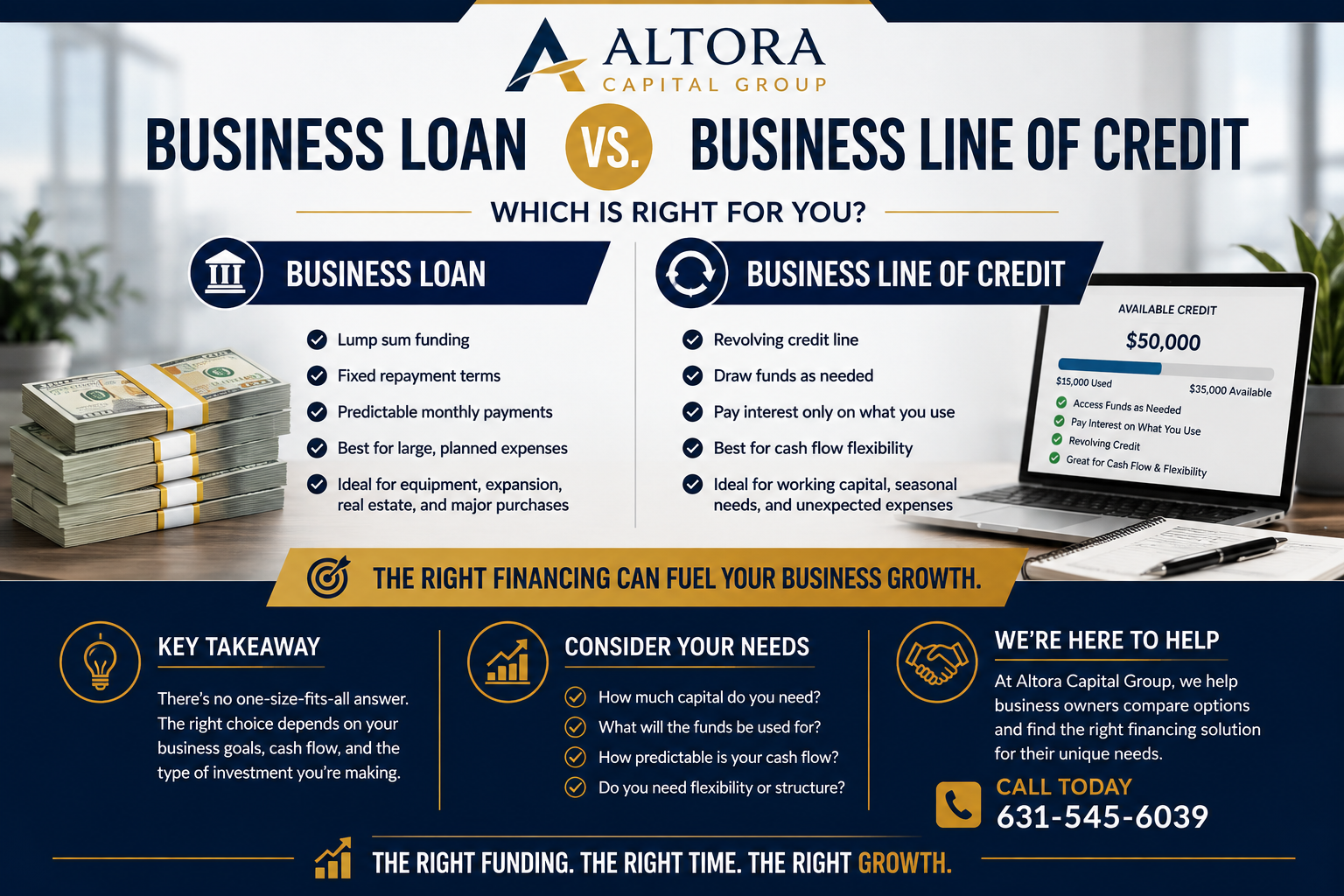
Business Loan vs. Business Line of Credit: Which Is Right for You?
When your business needs additional capital, choosing the right type of financing can be just as important as getting approved.
Two of the most common options are a business loan and a business line of credit. Both can provide access to capital, but they work differently.
Understanding the difference can help you make a more informed decision based on your business goals, cash flow, and how you plan to use the money.
What Is a Business Loan?
A business loan provides you with a lump sum of capital upfront that you repay over a predetermined period.
For example, if your business needs $50,000 to purchase equipment or expand, a business loan may provide the entire amount at closing.
A business loan may be a good fit for:
- Purchasing equipment
- Expanding your business
- Renovations or improvements
- Major inventory purchases
- Long-term investments
- Other significant business expenses
One of the biggest advantages of a business loan is predictability. You receive a specific amount and generally have a defined repayment structure.
What Is a Business Line of Credit?
A business line of credit works more like a financial safety net.
Instead of receiving one large lump sum, you're approved for a maximum credit limit and can draw funds as needed, subject to the terms of the financing.
For example, imagine your business has a $50,000 line of credit. You might use $10,000 today to cover an unexpected expense and potentially draw additional funds later as your business needs them, up to your available limit.
A line of credit may be useful for:
- Managing cash-flow fluctuations
- Seasonal businesses
- Unexpected expenses
- Short-term working capital
- Inventory purchases
- Day-to-day operating expenses
The major advantage is flexibility.
Business Loan vs. Line of Credit: What's the Difference?
| Business Loan | Business Line of Credit |
|---|---|
| Lump-sum funding Receive a specific amount of capital. |
Draw as needed Access funds up to an approved limit. |
| Best for planned expenses Useful for major purchases and projects. |
Best for flexibility Useful for changing or ongoing cash-flow needs. |
| Structured repayment Generally follows a defined repayment schedule. |
Flexible access Funds can generally be accessed as needed under the agreement. |
| Major investments Can be appropriate for equipment, expansion and other significant expenses. |
Working capital Can help businesses manage short-term operating needs. |
Key Takeaway
There is no one-size-fits-all answer.
The right choice depends on your business goals, cash flow, how much capital you need, and what you plan to use the financing for.
Which One Is Right for Your Business?
Consider a business loan if you know exactly how much capital you need and have a specific project or purchase in mind.
A line of credit may make more sense if your business experiences changing cash-flow needs and you want access to capital without necessarily taking the entire amount at once.
And sometimes, the answer isn't simply one or the other. Depending on your business and available financing programs, different solutions may address different needs.
Don't Guess — Compare Your Options
One of the biggest mistakes business owners can make is choosing financing based solely on the amount of money they're offered.
The structure of the financing matters, too.
Before accepting an offer, consider:
- How much capital do you actually need?
- What will the money be used for?
- How quickly do you need it?
- How predictable is your cash flow?
- What repayment structure fits your business?
- What happens if your financing needs change?
A financing option that looks attractive on paper may not necessarily be the best fit for your particular situation.
Altora Capital Group Can Help
At Altora Capital Group, our goal is to help business owners understand their financing options and identify solutions that fit their individual needs.
Whether you're looking for working capital, equipment financing, expansion funding, or another type of business financing, you don't have to figure it all out alone.
Ready to Explore Your Options?
Let's talk about your business, what you're trying to accomplish, and what financing options may be available.
SEE YOUR FINANCING OPTIONSThe right funding. The right time. The right growth.