
Business Financing for Trucking Companies: 6 Ways Funding Can Help Keep Your Fleet Moving
From equipment and repairs to fuel and delayed customer payments, trucking businesses often face expenses long before the revenue arrives.
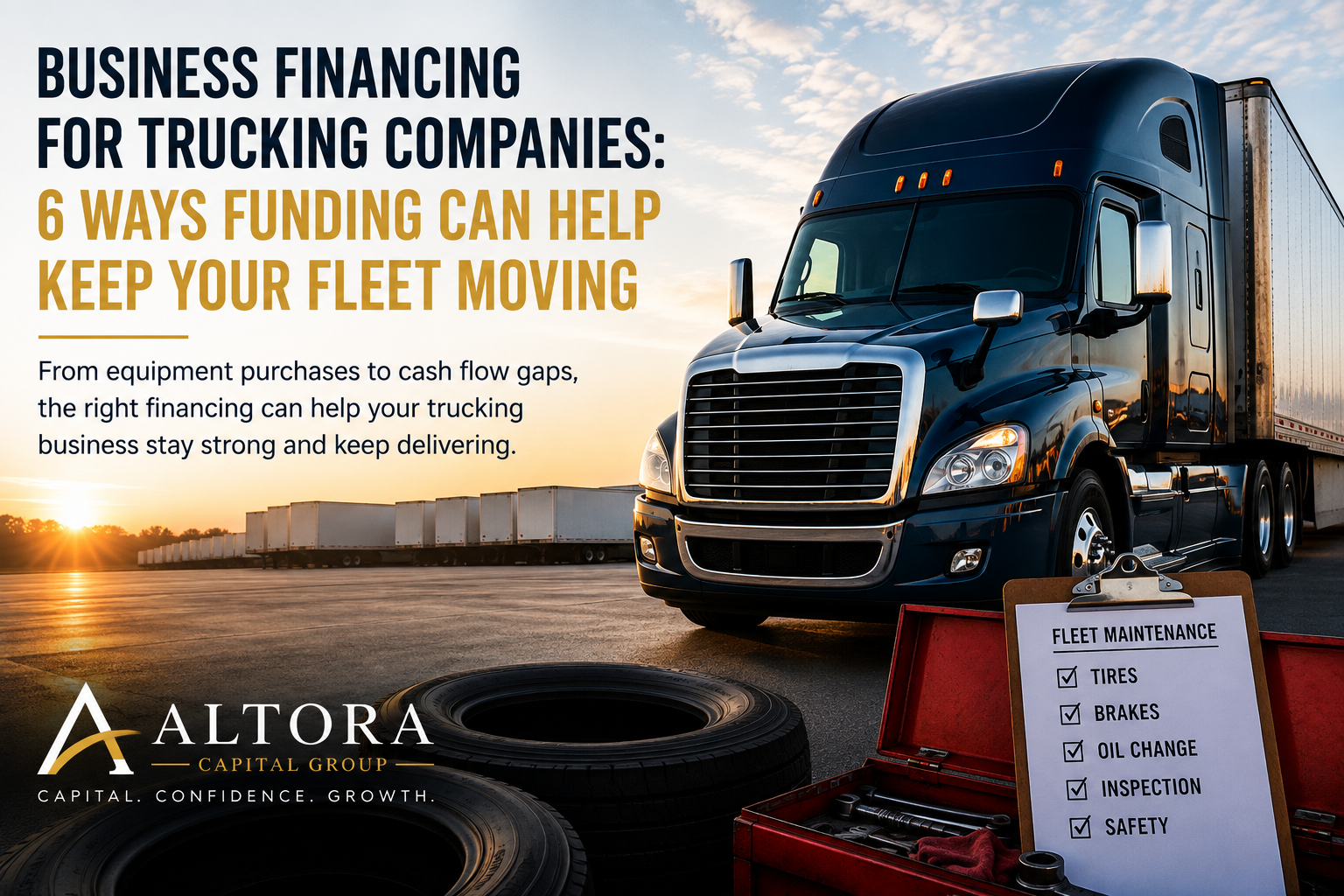
Running a trucking company means managing expenses that often arrive long before customers pay their invoices. Fuel, repairs, insurance, payroll, equipment, and unexpected breakdowns can all put pressure on cash flow.
Depending on the business and the financing product, additional capital may help a trucking company manage those expenses, respond to opportunities, or invest in growth without relying entirely on the cash currently sitting in the business.
1. Purchase or Upgrade Trucks and Equipment
Adding another truck, replacing an aging vehicle, or purchasing trailers and other equipment can require significant capital.
Equipment financing and other business financing options may allow a trucking company to spread eligible costs over time rather than paying the entire purchase price from available cash.
2. Handle Unexpected Repairs
A truck that isn't moving isn't generating revenue. Major engine, transmission, tire, or other repair expenses can appear without much warning.
Depending on the circumstances, access to working capital may help a trucking company address repairs while preserving cash for other operating expenses.
3. Manage Fuel and Everyday Operating Expenses
Fuel is one of the major ongoing expenses for many trucking businesses, and those costs do not wait for customers to pay their invoices.
A business line of credit or other working-capital solution may provide additional flexibility when operating expenses need to be covered before receivables arrive.
4. Bridge the Gap Between Deliveries and Customer Payments
Completing a load does not necessarily mean getting paid immediately. When customers pay on extended terms, the trucking company may still need to cover payroll, fuel, insurance, maintenance, and other expenses in the meantime.
Some forms of working-capital or receivables-related financing may help address those timing gaps, depending on eligibility and the structure of the financing.
5. Add Drivers or Expand Your Fleet
Growth can create expenses before it creates additional revenue. Hiring drivers, adding trucks, obtaining insurance, registering equipment, and taking on larger contracts may all require upfront capital.
The appropriate financing structure may help a trucking company pursue an opportunity without placing excessive pressure on existing cash reserves.
6. Prepare for the Unexpected
Even a well-run trucking operation can face surprises. A major repair, changing fuel costs, delayed customer payment, or new business opportunity can quickly change a company's cash needs.
Understanding potential financing options before an urgent need arises can give a business owner more time to compare choices and consider the cost and repayment structure.
Equipment
Trucks, trailers, machinery, technology, and other assets used in the operation.
Working Capital
Fuel, payroll, insurance, repairs, and other everyday operating needs.
Cash-Flow Gaps
Timing differences between completing work, invoicing customers, and receiving payment.
Growth
Adding drivers, expanding capacity, or pursuing opportunities that require upfront investment.
Finding the Right Financing for Your Trucking Business
There is no single financing product that is right for every trucking company.
Potential options can depend on factors such as time in business, revenue, credit profile, existing obligations, equipment, intended use of funds, documentation, and how quickly the capital is needed.
Look at the Payment, Cost, and Business Goal Together
Approval alone does not determine whether financing is a good decision. Before accepting an offer, consider the payment frequency, repayment term, total expected cost, effect on cash flow, and whether the financing is likely to create enough value for the business to justify the obligation.
The Bottom Line
Trucking businesses operate in a capital-intensive industry where equipment, repairs, fuel, insurance, payroll, and payment timing can all affect cash flow.
Financing may provide useful flexibility, but the right choice depends on the specific need and the financial position of the business. Start with the goal, understand the numbers, and compare the available options before moving forward.
Have Questions About Financing for Your Trucking Business?
Tell us what you're trying to accomplish and let's explore potential financing options that may fit your business.
This article is for general informational purposes only and does not constitute financial, legal, tax, or accounting advice. Financing products, rates, terms, approval amounts, fees, collateral requirements, and eligibility vary by provider and applicant and are subject to review and approval.